A door security bar is a device that braces or reinforces a door to provide added resistance when pressure is applied from the other side. They can be useful in homes, offices, schools and other buildings, but how well they work depends on the type of bar, the door it is used with and the surface it pushes against.
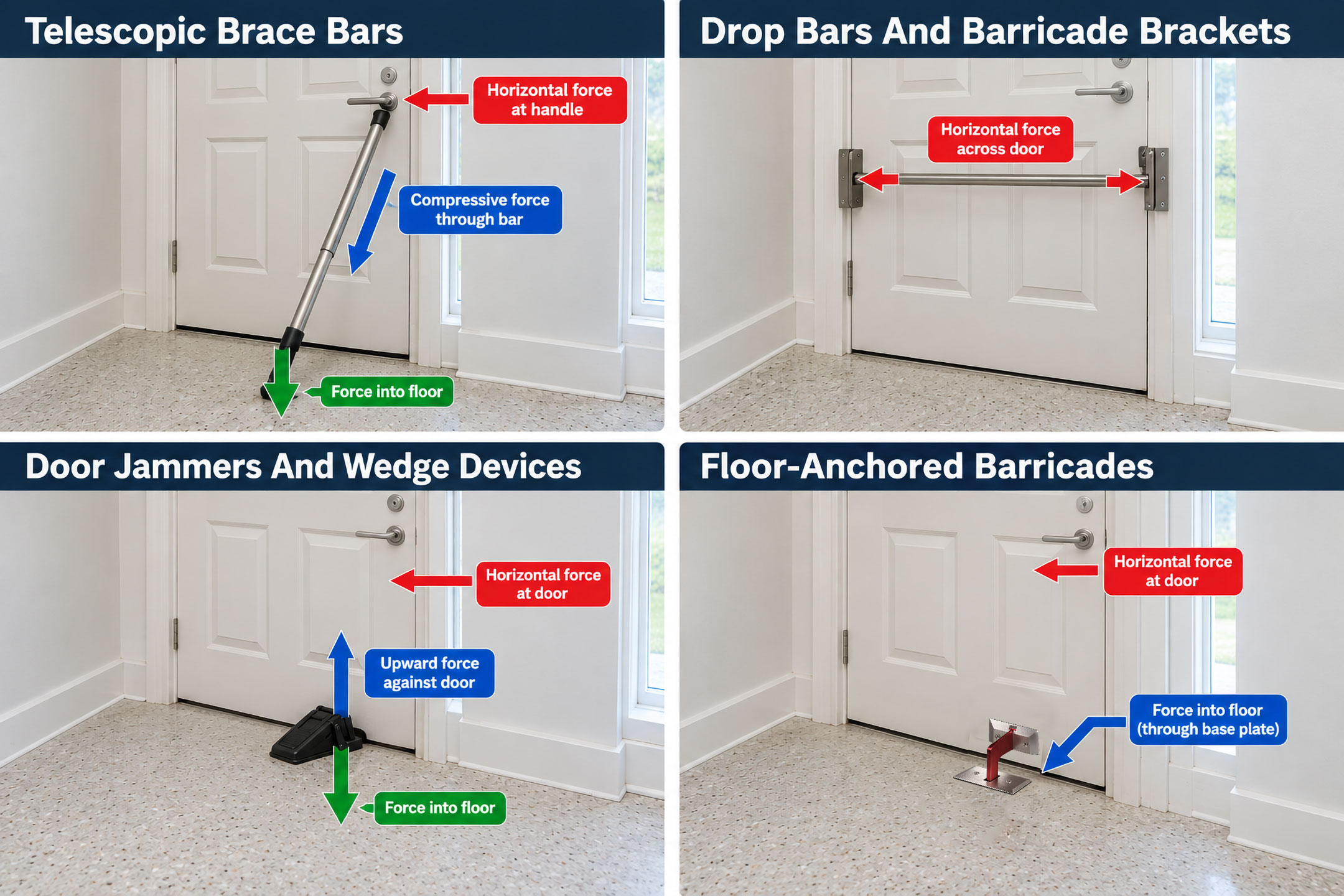
There are four main types to consider when it comes to comparing door security: telescopic brace bars, drop bars and barricade brackets, door jammers and wedge devices, plus floor-anchored barricades. Each has a different purpose. Some are portable and suited to occasional use while others are fixed in place for doors that need a consistent internal reinforcement option.
Do Door Security Bars Actually Work?
Yes, a door security bar can provide useful additional resistance when it’s correctly matched to the door and the surrounding structure. It should be treated as one element of a wider security or lockdown plan rather than a complete solution on its own.
Three factors make the greatest difference:
- Where the force is directed: Some bars brace against the handle area while others transfer force into the floor or door frame.
- What the bar pushes against: A smooth floor, soft carpet, a wall bracket or a fixed floor plate can all affect how a device performs.
- Whether it’s available when needed: A portable bar is flexible, but it needs to be close by and the person using the room must know how to deploy it safely.
The strength of the door leaf, frame, hinges, strike plate and fixings all play a part in how the door responds under pressure. A security bar can add another point of support, though it can’t overcome unsuitable doors, weak frames or poor fitting.
The Main Types Of Door Security Bar
Telescopic Brace Bars
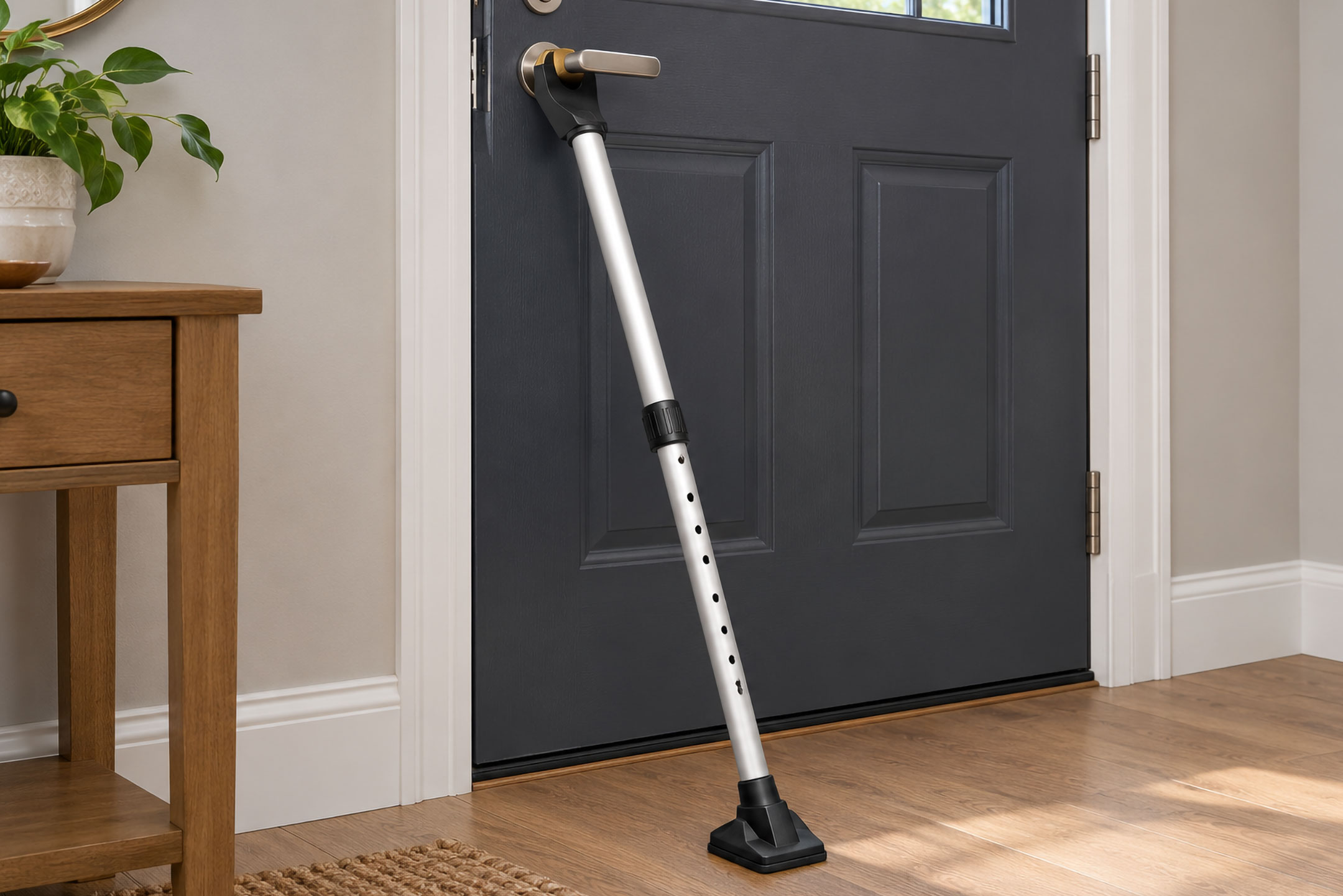
A telescopic door brace is an adjustable bar that usually sits between the door handle area and the floor and commonly used on domestic entrance doors and may also be considered for some internal doors.
The top end rests beneath or around the handle while the padded lower end sits against the floor. When pressure is applied to the door, the bar is intended to transfer some of that force downwards.
Telescopic models are usually one of the more familiar door brace options in the UK. Prices vary considerably according to the design, material and retailer but are typically between £60-£120.
Drop Bars And Barricade Brackets
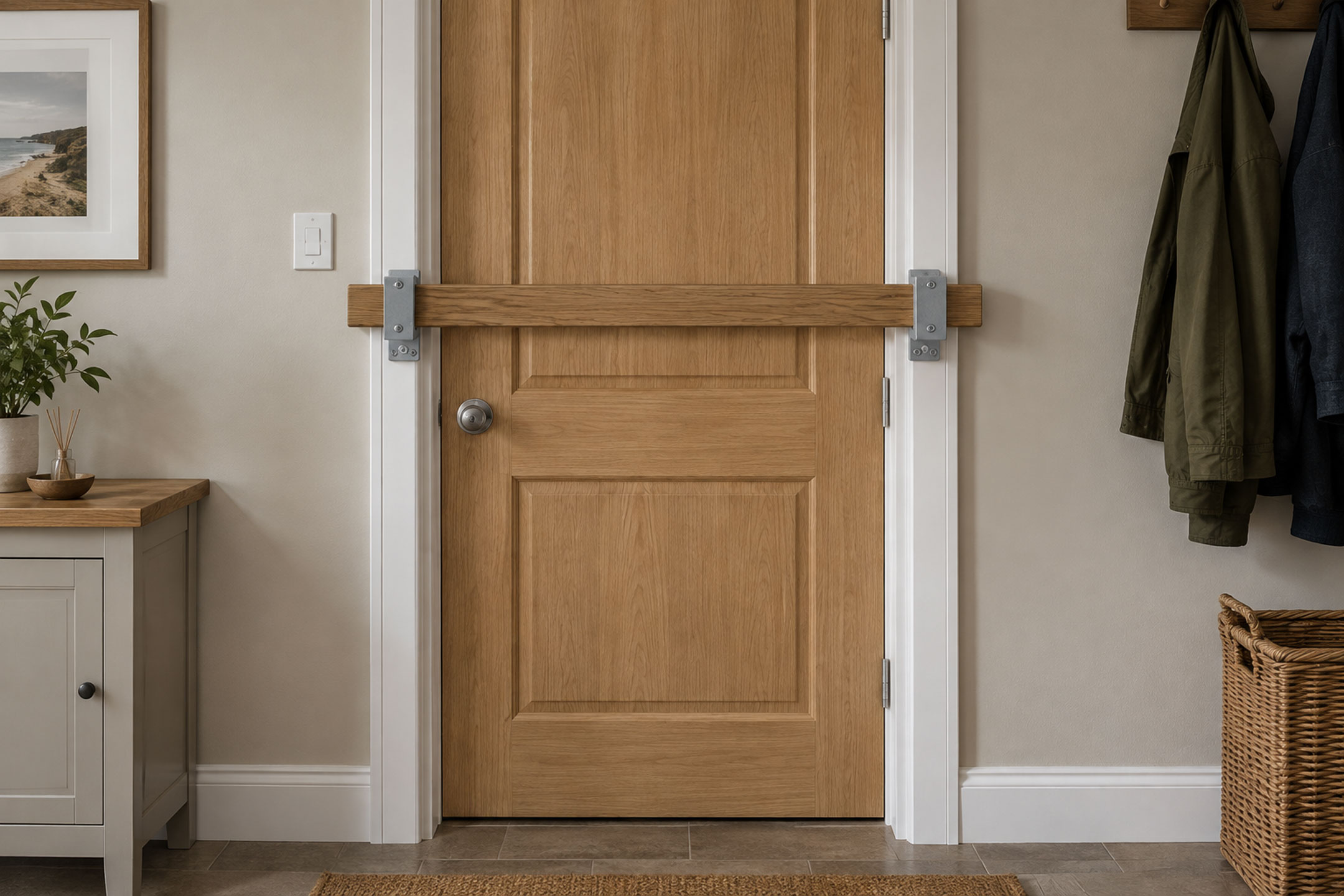
Drop bars are fitted across a door or opening using brackets fixed to the surrounding structure. In commercial settings, they may be used for gates, storerooms, shutters or certain outbuilding doors.
A bar is lowered or fed through into its brackets to create a horizontal restraint across the door. This type of door bar security solution can be robust, but it requires suitable fixing points and should be chosen carefully where people need to leave the room quickly.
One limitation is that a drop bar may take longer to put in place, if the bar needs to be fed through, rather than dropped in. When not in use, the bar needs to be stored securely and closely too. Prices generally range from around £50 to £150, although this will vary heavily depending on the size, material and delivery costs.
Door Jammers And Wedge Devices
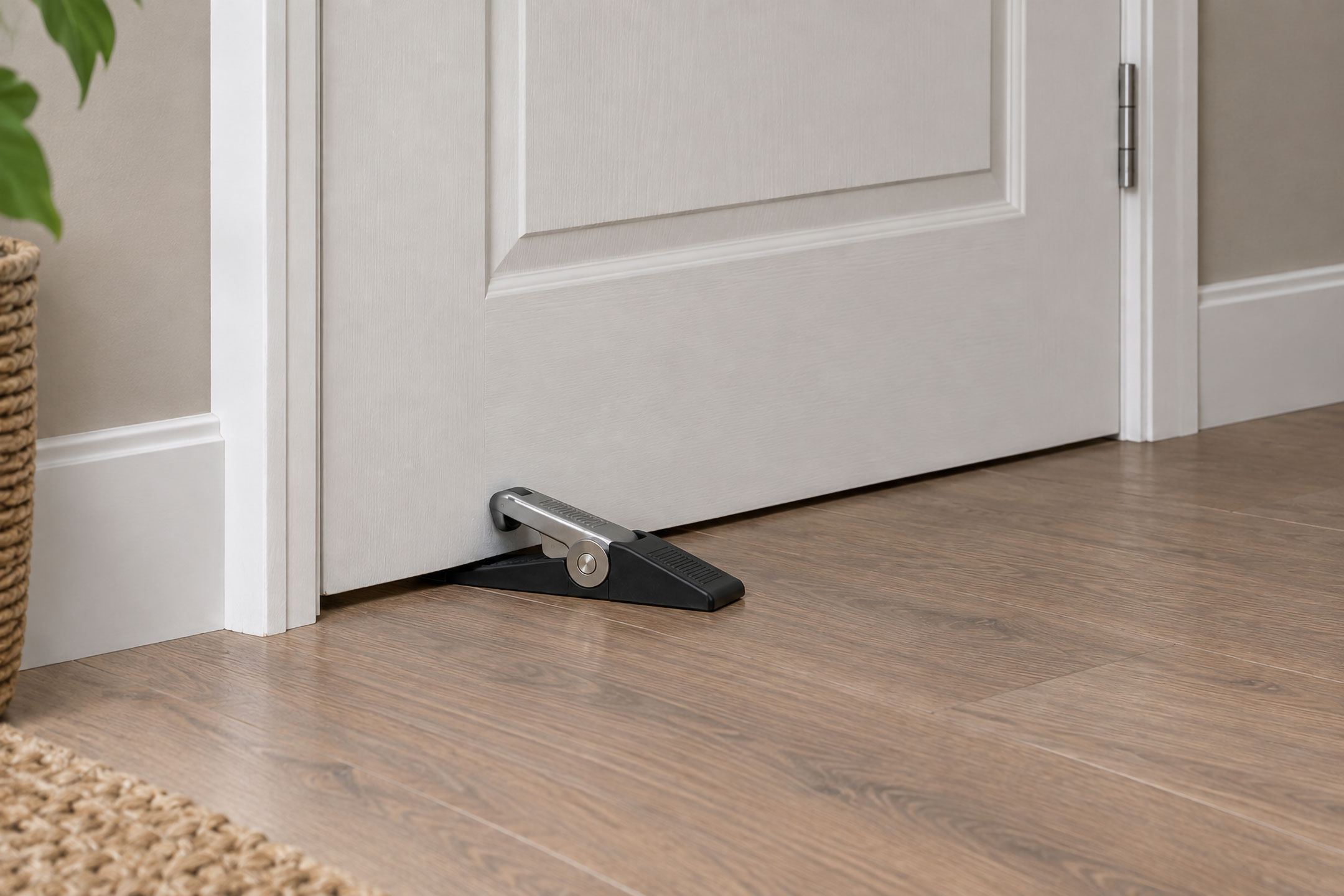
Door jammers are compact portable devices that brace an inward-opening door from the inside. Some fit beneath the door and press against the floor while others use a wedge-style design to help limit movement.
They are often chosen for short-term use because they are small, portable and do not need permanent fixings. This can make them useful for travelling, temporary workspaces or rooms where permanent alterations are not suitable.
Their performance can depend on the floor surface, the gap beneath the door and whether the device is positioned correctly. On smooth flooring, thick carpet or uneven surfaces, a jammer may slip or fail to stay firmly in place under pressure.
A portable door jammer can be useful when it needs to move between rooms or be stored away after use. For a classroom, office or other room where the same door may need reinforcing regularly, a fixed device may be easier to keep ready and use consistently. These temporary solutions are generally priced at around £20 to £30.
Floor-Anchored Barricades
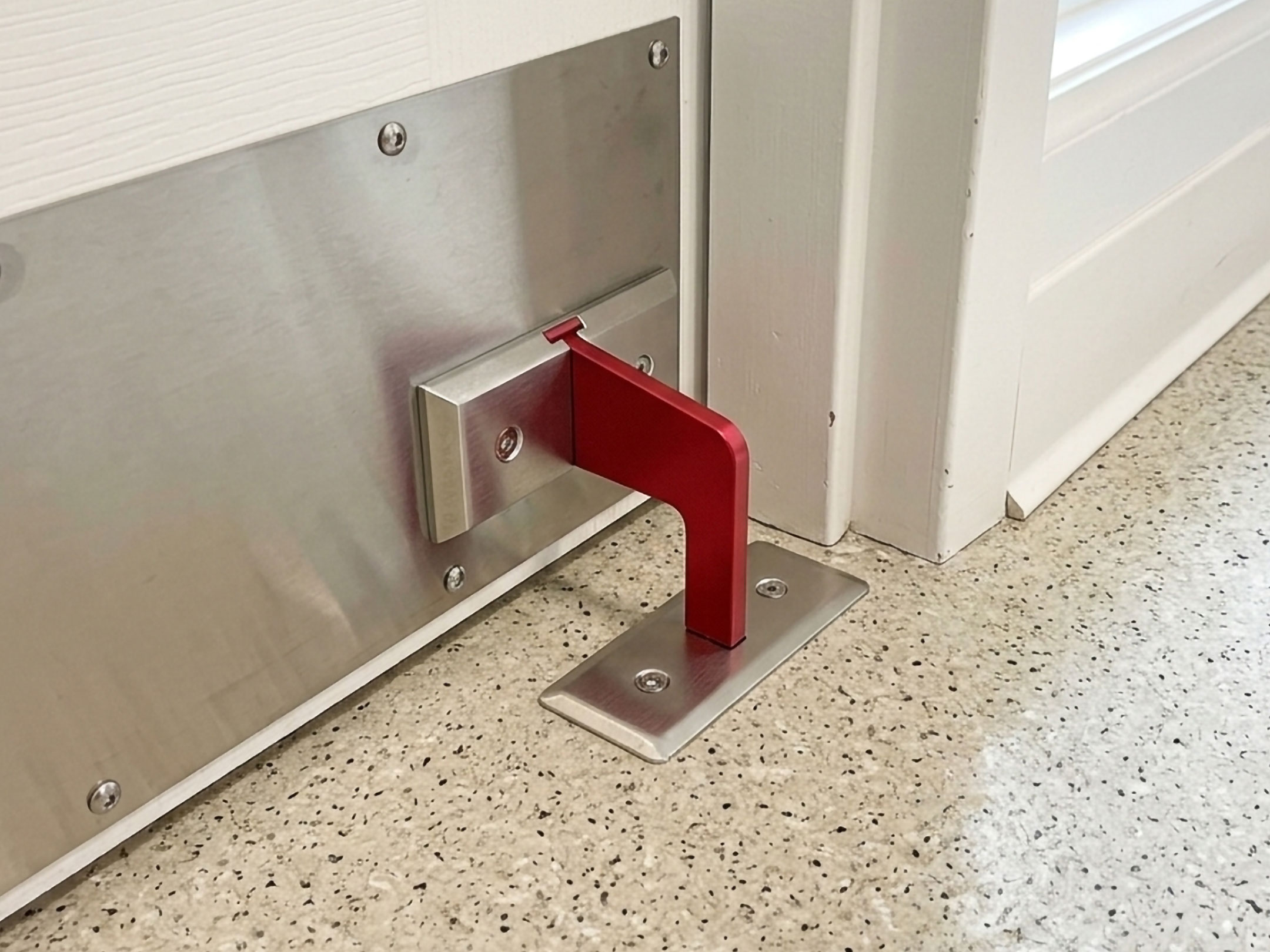
A floor-anchored barricade is fitted at the base of a compatible inward-opening door. It uses a permanently installed floor plate and a removable component that is placed against the door when additional reinforcement is required.
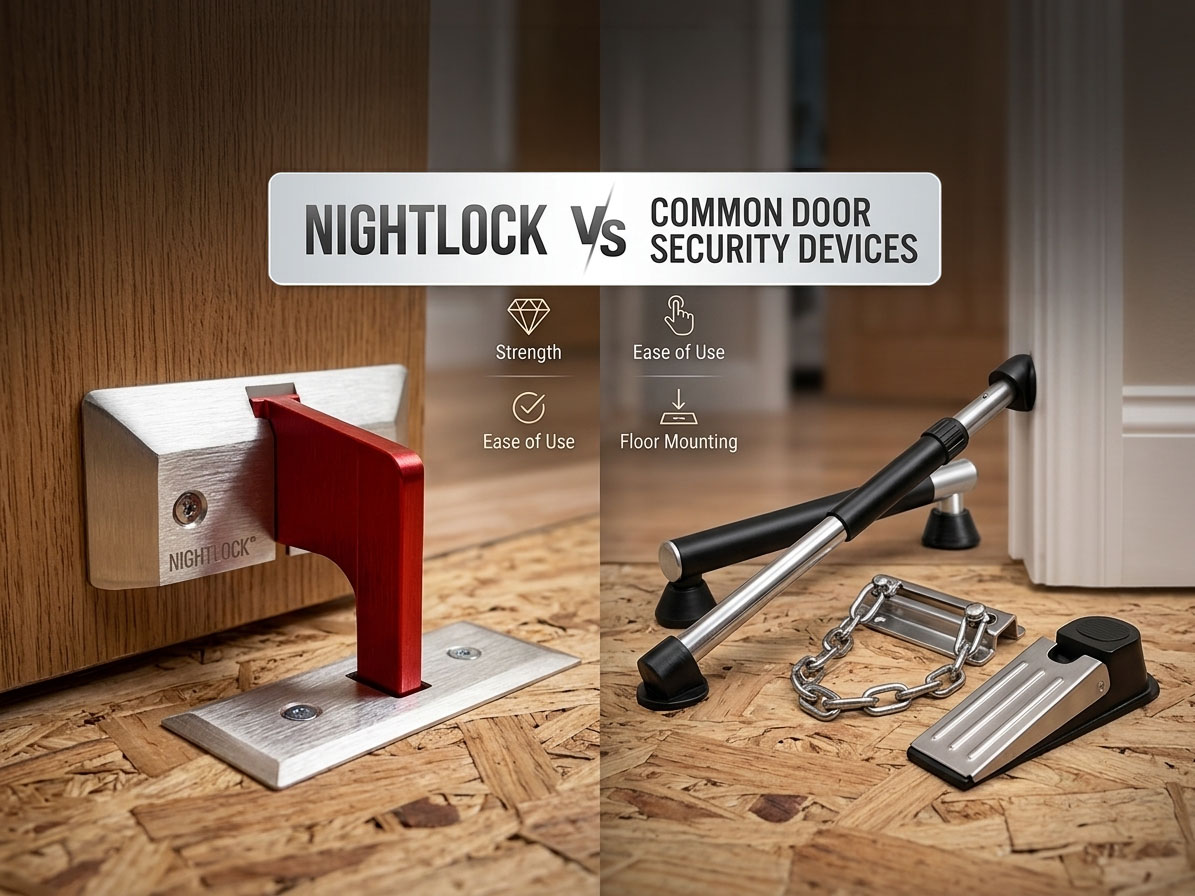
This type of device transfers support into the structural floor rather than relying on friction against the floor or pressure against the handle and this is the category that Nightlock falls into.
Nightlock is supplied for straightforward self-installation on compatible doors, with manufacturer guidance included. It works alongside existing door hardware and can be considered as part of wider lockdown planning in schools, colleges, offices and commercial premises. The How Nightlock Works page explains the floor plate and removable barricade component in more detail.
Door Security Bar Comparison Table
| Type | How It Fits | Portable | Works Well For | Points To Consider |
|---|---|---|---|---|
| Telescopic Brace Bar | Between the handle area and floor | Yes | Home entrance doors and some internal hinged doors | Needs a suitable handle arrangement and enough grip on the floor |
| Drop Bar Or Bracketed Bar | Across the door using fixed brackets | No | Garages, sheds and suitable storage areas | Requires strong fixing points and must not obstruct an escape route |
| Door Jammer Or Wedge Device | Under or against an inward-opening door | Yes | Temporary use, travel and rooms where permanent fitting is unsuitable | Performance may vary with the door gap, floor surface and positioning |
| Floor-Anchored Barricade | Fitted floor plate with removable barricade component | The barricade component is removable | Compatible inward-opening internal doors in classrooms, offices and commercial buildings | The door and structural floor must be suitable before fitting |
Which Security Bar Is Right For Your Door?
The right security bar depends on how the door is used, who needs to use it and whether the device needs to be permanent or portable.
Front And Back Doors At Home
For a residential entrance door, a telescopic brace bar may be considered as an additional internal support. It can be removed when not required and does not usually involve permanent fitting.
However, a brace bar shouldn’t be viewed as a substitute for a well-maintained door, secure frame, suitable locking hardware and good day-to-day security habits. The condition of the door, frame, hinges and existing locks should all be thoroughly considered when deciding whether a brace bar is suitable.
Patio And Sliding Doors
Patio and sliding doors need a different approach. A telescopic security bar may be designed to sit within the track or prevent a sliding panel from moving, while other products are intended for hinged doors only.
Always check that a product is made for the door style you have. A security bar for a hinged door should never be adapted for a sliding door unless the manufacturer specifically confirms that it’s appropriate.
Internal Doors In Offices, Classrooms And Clinics
This is where a floor-anchored internal door security bar can be particularly relevant.
Many internal doors in offices, classrooms and clinics open inwards. They might not have no lock at all, or the person inside the room may not hold a key for it. In these circumstances, a portable brace bar might be difficult to position reliably or unavailable when needed.
Nightlock is well suited to this type of setting. It provides a fixed reinforcement point at the base of a compatible inward-opening door, giving occupants a clear and consistent way to secure the room from inside. The floor plate remains in place while the removable barricade component can be kept nearby, ready to use as part of an established lockdown procedure.
It works alongside existing locks and access systems, adding practical support where an internal door has no lock or the room occupant doesn’t have a key. Find out more about how it works on the How Nightlock Works page.
Sheds, Garages And Outbuildings
A drop bar or bracketed security bar may be suited to certain sheds, garages and storage buildings. These devices are generally designed for doors that can accommodate brackets and where there is no risk of restricting an escape route. The quality of the door, frame and fixing surface matters. A substantial bar fitted to a weak timber frame will fail reasonably quickly.
Where Door Security Bars Can Fall Short
A security door bar should always be chosen with its limits in mind. The most suitable option isn’t necessarily the largest or most visible one but one that suits the door type, building and intended use.
- Unsuitable floor surfaces: Portable brace bars and wedge devices may move on smooth flooring, loose rugs or thick carpet
- Weak doors or frames: A device can only reinforce the points it touches. Damaged, lightweight or hollow doors may not suit every type
- Outward-opening doors: Many products are intended for inward-opening doors. Check the configuration before ordering
- Poor availability: A portable bar is less useful if it is kept in a cupboard or people are unsure how to use it
- Over-reliance: A security bar can support a wider approach but cannot replace suitable hardware, clear procedures and staff guidance
Portable Or Floor-Mounted: The Trade-Off
Portable door bars are useful when flexibility is the priority. They do not need permanent fitting and can move between rooms or buildings, but their performance often depends on the floor surface and correct positioning. They also need to be stored somewhere accessible, then found and placed correctly when they are needed.
A floor-mounted device takes more preparation at the outset, but it provides a consistent reinforcement point for the same door every time. Once the floor plate is fitted to a compatible inward-opening door and structural floor, it remains in place. The removable barricade component can then be positioned against the base of the door when required.
Nightlock is an example of this type of system. Rather than bracing against the floor through grip or pressure alone, it uses a fitted floor plate to create a fixed point at the base of the door. This can make it well suited to classrooms, offices and other internal rooms where people need a familiar method of reinforcing the door as part of an established procedure.
Nightlock Specification
| Feature | Detail |
|---|---|
| Device Type | Floor-mounted internal door reinforcement device |
| Suitable Door Type | Compatible inward-opening doors |
| Material | Aluminium with an anodised finish |
| Dimensions | 15.24 × 10.16 × 5.08 cm |
| Weight | 1.25 lbs |
| Floor Plate | 1/8-inch floor plate |
| Installation | Designed for straightforward self-installation, typically taking around 20 to 30 minutes |
A portable bar may be the better fit for a door where the device needs to move. A floor-mounted option is more appropriate where the same internal door needs a reliable and repeatable method of reinforcement. The article brief identifies this distinction as the key decision point for readers comparing portable and fixed door security systems.
Fire Doors, Final Exits And Safe Escape
Door security must never compromise a building’s ability to evacuate safely.
Do not fit a security bar to a final exit or any door forming part of an escape route if it could prevent people from opening the door quickly from the inside during an emergency. Government fire safety guidance states that doors forming part of a means of escape should be immediately openable and easy to operate without a key or code.
Fire doors also need to be carefully considered. Adding any device may affect the door’s certification, self-closing function or fire safety role. Before fitting a door bar to a fire door, speak with the door manufacturer and the responsible person for the building.
For further guidance on inward-opening doors, fire door considerations and product suitability, visit our FAQs.
Frequently Asked Questions
- What Is A Door Bar?
A door bar is a general term for a device that braces, blocks or reinforces a door. It can refer to a telescopic brace, a crossbar, a portable jammer or a floor-anchored barricade. It does not usually refer to a weather bar or carpet threshold bar.
- Do Door Security Bars Really Work?
They can provide useful additional resistance when they are suitable for the door and fitted or positioned correctly. Their effectiveness depends on the device type, the strength of the door and frame, the floor surface and whether the user can deploy it properly when needed.
- What Is The Best Door Security Bar In The UK?
There is no single best option for every door. A telescopic brace may suit a home entrance door while a drop bar may suit a garage. For compatible inward-opening internal doors in schools or offices, a floor-anchored device may be more appropriate.
- What Is The Best Security Bar For A Main Door?
A main door needs to be assessed as a complete system, including the door, frame, locks and hinges. A removable brace bar may add support in some homes, but it should not replace appropriate locks, maintenance and suitable door security measures.
- How Do I Brace A Door?
Choose a device designed for the door type and follow the manufacturer’s instructions. A brace must not block an escape route or make it harder to leave in an emergency. For workplaces, schools and public buildings, check suitability before introducing any device into procedures.
- Can A Door Security Bar Be Used On A Fire Door?
Only after checking that it will not affect the fire door’s intended function, certification or self-closing action. It must also not compromise safe escape. Seek guidance from the door manufacturer and the responsible person for the building before fitting any additional hardware.
A portable option may suit a door that needs flexibility. A fixed floor-mounted solution may be a better fit where a compatible internal door needs to be reinforced in the same way each time. Find out how Nightlock works or contact Nightlock to discuss a building with more than one door.