School security works in layers, from the site boundary to the classroom door. Most schools have already invested in outer measures like gates, fencing, lighting, CCTV and controlled entry. These are important parts of a secure site, but they’re only part of the wider picture.
The Department for Education’s School and college security guidance, updated on 3 July 2026, asks schools and colleges to take proportionate steps based on their own risks.
So naturally, school business managers, site managers, governors or trust estates leads, tend to ask the practical question as to whether the layers continue all the way through the building. If an incident affects the site, can staff control access, communicate clearly and secure the rooms they are responsible for?
This guide provides a simple four-layer framework to help walk through the building and identify where further thought may be needed including a free downloadable checklist.
What The DfE Guidance Asks Schools To Do
DfE guidance says schools and colleges should have a security policy and plan, with a dedicated competent person responsible for overseeing security arrangements. Schools should carry out a risk assessment that considers the threats to the school, including risks beyond the school estate and from the wider community. The findings should inform proportionate preventative measures to reduce identified risks and protect pupils and staff. Schools should also test their arrangements through appropriate training, drills or exercises, and review and update their plans as necessary. Where the risk assessment identifies a threat, schools should think about whether dynamic lockdown procedures are appropriate for their circumstances.
Physical security and safeguarding are related but distinct areas of school responsibility. Physical security covers the measures, buildings, access arrangements and procedures used to manage security risks and respond to incidents. Safeguarding is broader and concerns the protection and welfare of children, and should continue to be managed through the school’s safeguarding policies, procedures and responsibilities under Keeping Children Safe in Education (KCSIE).
The Four Layers Of School Security
A useful way to review school security systems is to work from the outside in:
- The perimeter
- The entrance
- Inside the building
- The room
Each layer has a different role. A strong perimeter can deter, delay and help staff identify concerns. Good visitor arrangements can control entry. Internal zoning and communication can help people respond. The final layer is whether the room itself can be secured when staff need it to be.
Layer One: The Perimeter
Fencing and Gates
Fencing and gates establish the physical boundary of a school site and help make access points clear. They can deter casual or unauthorised entry, direct visitors towards designated entrances and make unexpected access routes more visible to staff.
The effectiveness of the perimeter depends on how consistently it’s maintained and used. Gates need to work as intended, fencing should be kept in good condition, and arrangements should reflect changes to the site, such as building works, deliveries or temporary access routes. The aim is to create a clear and manageable boundary between the school and its surroundings.
Lighting and CCTV
Lighting can make entrances, pathways and less visible areas easier to oversee during darker hours. CCTV can support the school’s security arrangements by helping staff monitor key areas, review events and share relevant information where appropriate.
These measures work best when they are planned around the site. A camera that does not cover the relevant approach or lighting that leaves a regular access route in shadow may not support the intended outcome.
What The Perimeter Can’t do
Perimeter security provides an important first layer, but it can’t manage every situation on its own. A visitor could already be on site, an access point could be left unsecured or an incident could begin inside the building. Gates, fencing, lighting and CCTV therefore need to sit alongside clear entrance controls, internal security arrangements and room-level procedures.
Layer Two: The Entrance
School Security Access Control and Door Entry
School security access control helps staff manage who can enter the building and when which includes a locked main entrance, door entry systems, keypads and fobs.
A controlled main entrance gives reception staff a clearer opportunity to welcome visitors, understand why they’re on site and direct them appropriately. It also supports a consistent message: visitors report to reception before moving through the school.
The same approach needs to apply across the site. Side doors, staff entrances, delivery entrances and other access points should have clear arrangements and ownership because a well-controlled front entrance can be undermined if a side door is routinely propped open, a delivery entrance is left unsecured or nobody is responsible for checking an alternative access point.
Visitor Management and ID
Visitors should know where to report and staff should know how visitors are identified while they’re on site. This typically involves signing in, displaying a badge, being collected from reception or remaining accompanied where appropriate.
The important point is consistency. Staff, visitors and contractors should understand what is expected from the moment someone arrives at the site until they leave. Door entry systems can help control access, but effective visitor management depends on the people and procedures behind them.
Layer Three: Inside The Building
Zoning and Internal Doors
Once visitors and staff move beyond reception, the focus shifts to how easily they can access the rest of the building. Internal zoning helps schools guide people towards the areas they need to use while keeping spaces such as classrooms or staff areas appropriately separated.
Doors and corridors are central to this. Staff should know which routes visitors can use freely, which doors are normally kept controlled and what happens if access needs to be restricted.
This isn’t to say that every internal door needs the same security measure but to make sure each area has arrangements that reflect how it’s used and the role it may have within the school’s wider procedures.
Alert and Communication Systems
An alert system helps people understand that something is happening and what they need to do next and that is where clear communication matters as much as the signal itself. Staff need to recognise the school alarm, understand the instruction and know where to find further guidance.
Importantly, these alerts tell people to take action but on its own, it doesn’t secure doors.
Layer Four: The Room
Can the Door Be Secured From Inside, by Anyone, Without a Key, in Seconds?
At classroom level, security comes down to a simple practical question: if a teacher needs to secure the room, can they do it from inside, without having to find a key or rely on someone else?
A procedure that tells staff to lock the classroom door only works if the door itself makes that possible. The method needs to be quick, straightforward and available to the person who is in the room at the time. It should also work consistently across the school, rather than depending on individual teachers knowing which doors have which locks.
Why Most Classroom Doors Fail That Test
Many classroom doors open inwards and have a lever handle, with either no lock or a lock that requires a key. If the key is kept elsewhere, carried by only certain members of staff, or takes time to locate, the instruction to “lock the door” may not be immediately achievable.
This is an important distinction between having a security procedure and having a room that can support that procedure. A school may have clear instructions for staff, but if securing a particular classroom requires finding a key, leaving the room or relying on another person, there is a gap between the written plan and what can actually happen during an incident.
The answer is not necessarily the same for every classroom. The existing door, its hinges, its opening direction, the type of lock and its fire safety requirements all need to be considered before changes are made.
What Closes the Gap?
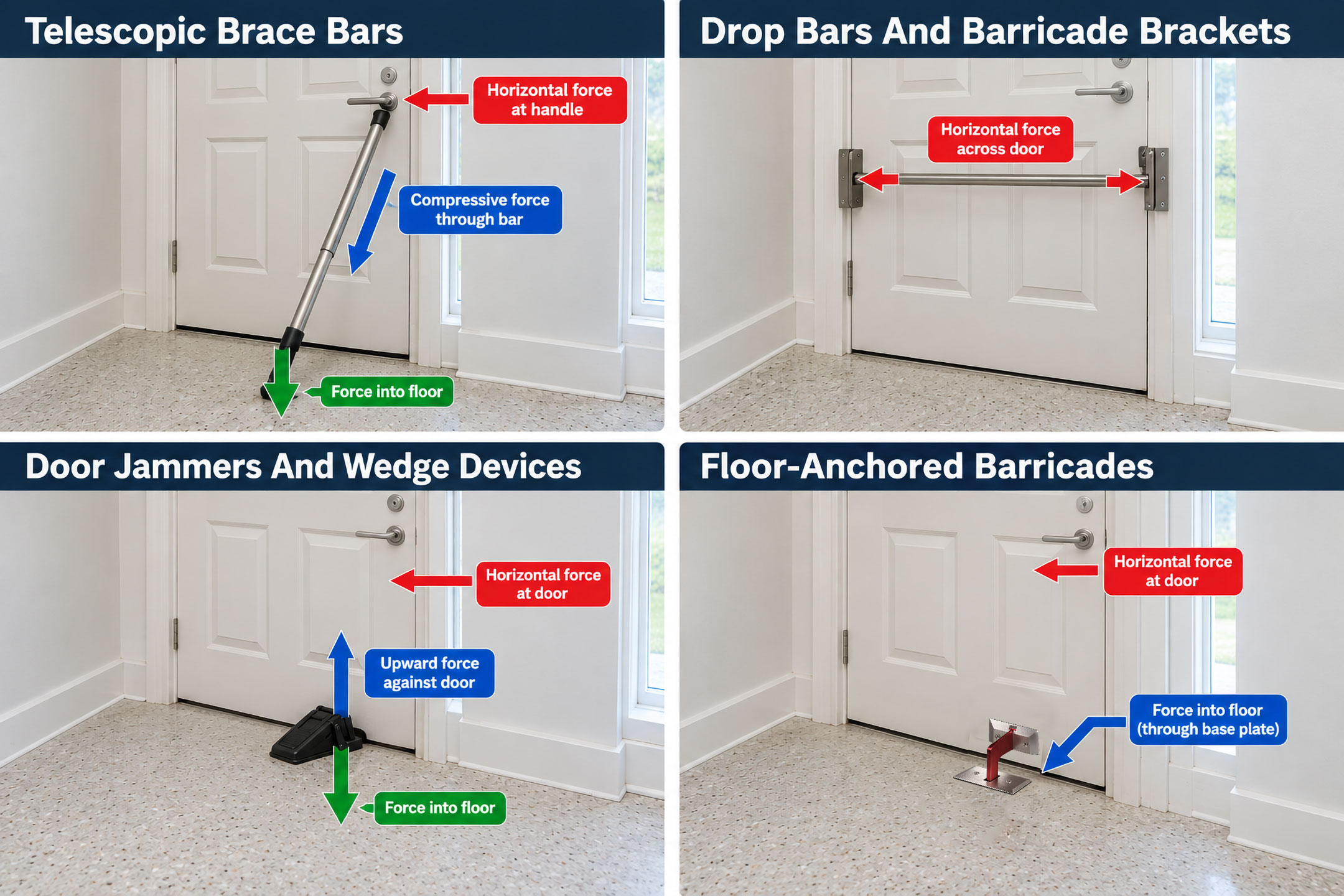
There are several ways schools can improve the ability to secure a classroom from inside. A school safety solution for internal doors could involve changes to the lock, a portable device or a fixed floor-mounted option, depending on the door, the room and the school’s procedures.
Keyed locks can provide a straightforward solution where the appropriate key is immediately available. However, this introduces key management as part of the security arrangement. Schools need to consider who has keys, where they are kept and whether they are accessible when needed.
Thumb-turn locks can allow a door to be secured from inside without a key. Retrofitting them can involve cost and installation considerations. Compatibility with the existing door and fire safety arrangements needs to be checked.
Portable devices can provide an alternative where changing the door itself isn’t appropriate. They need to be readily accessible, suitable for the particular door and floor surface and capable of being used correctly under pressure. A device that is stored somewhere else or doesn’t fit the room it’s intended for, can’t provide reliable protection.
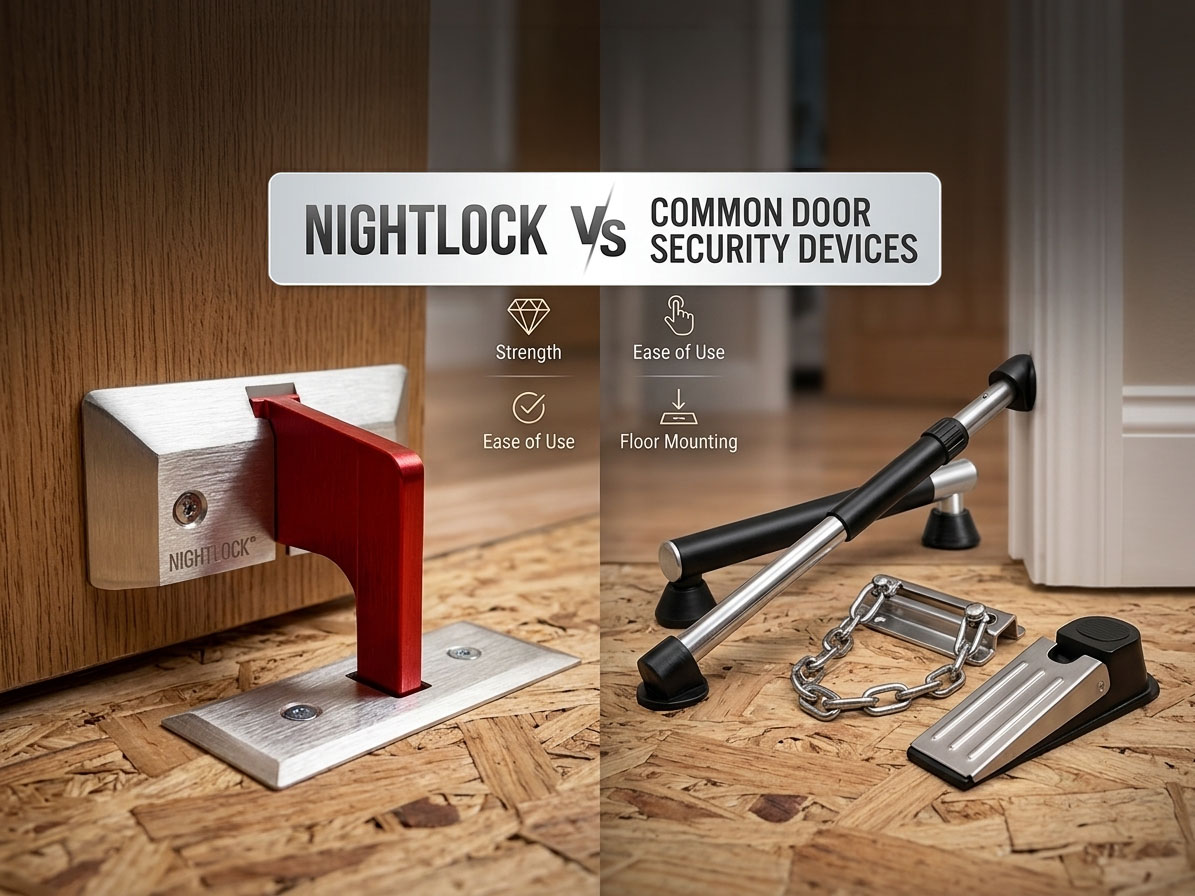
Floor-mounted devices are fitted in position so that the means of securing the door is always available in the room. This can remove some of the practical problems associated with finding or carrying a device. Once the device is fitted, it will always remain there.
Nightlock is a floor-mounted door barricade system that can be considered to help close that gap in schools and colleges allowing any user to quickly and easily understand what to do and how a floor mounted device engages when the time comes. The aim is to close the gap between the school’s procedure and the physical reality of the classroom: the person who needs to secure the room should be able to do so, from inside, in seconds.
Lockdown, Invacuation And Evacuation
Schools may need different responses depending on the nature and location of an incident. ProtectUK describes evacuation, invacuation and lockdown as distinct emergency-response options. The right decision will depend on the circumstances, the information available and the school’s own planning.
| Response | What It Means | When It May Apply |
|---|---|---|
| Evacuation | Moving people safely out of the building or affected area | When leaving the area is considered the safer option |
| Invacuation | Moving people away from danger to a safer area within the site | When a threat is outside or leaving the building could increase risk |
| Lockdown | Securing all or part of the premises to manage movement into and within the site | When access needs to be controlled and people need to remain in suitable rooms or areas |
The school’s procedures should explain how staff receive instructions and what is expected of them. It’s also helpful to consider how evacuation, invacuation and lockdown arrangements may work alongside each other rather than treating them as isolated plans. ProtectUK recommends planning for a range of possible responses and making sure infrastructure supports the procedures in place.
Walk The Building: A Four-Layer Checklist
A site walk-through can help turn a security policy into practical questions. The checklist below is designed for any relevant staff to complete while walking around the site.
| Layer | Question | Yes / No / Partly | Notes |
|---|---|---|---|
| 1.A Perimeter | Are fencing, gates and boundary points maintained and suitable for the way the site is used? | ||
| 1.B Perimeter | Can staff identify when gates or external doors have been left open or propped? | ||
| 1.C Perimeter | Are approaches, entrances and less visible parts of the site adequately lit for their use? | ||
| 1.D Perimeter | Where CCTV is used, is it positioned and maintained to support the school’s arrangements? | ||
| 2.A Entrance | Do visitors know where to report when they arrive? | ||
| 2.B Entrance | Are visitors identified and managed in line with the school’s procedures while on site? | ||
| 2.C Entrance | Are side doors, delivery entrances and gates assigned to a named person or team? | ||
| 2.D Entrance | Does access control work consistently at the main entrance and other controlled entry points? | ||
| 3.A Inside The Building | Can the school limit access to particular corridors, departments or areas when appropriate? | ||
| 3.B Inside The Building | Are internal routes and access arrangements understood by relevant staff? | ||
| 3.C Inside The Building | Is there a clear way to alert staff and pupils to an incident and give them instructions? | ||
| 3.D Inside the Building | Do supply staff, contractors and regular visitors know what the relevant signals and instructions mean? | ||
| 3.E Inside The Building | Are drills / practice lockdowns carried out for staff and students? | ||
| 4.A The Room | Can every classroom door be secured from inside, by anyone, without a key, in seconds? | ||
| 4.B The Room | Have door direction, condition, fire safety and escape arrangements been checked before adding a security measure? | ||
| 4.C The Room | Have room users been shown what to do with the particular door they use? | ||
| 4.D The Room | Can room-level arrangements support procedures without preventing safe escape? |
Common Mistakes When Reviewing School Security
Spending the whole budget on layer one
Fencing, gates, lighting and CCTV are visible and familiar security measures, but they are only the outer layer. A strong perimeter doesn’t address what happens once someone is inside the site or building, so investment should reflect the risks at each layer rather than stopping at the boundary.
Writing a policy nobody has walked
A security plan can look comprehensive on paper and still fail to reflect how the school actually operates. Staff should be able to walk the routes, access points and procedures described in the plan and identify where they work, where they do not and where assumptions have been made.
Testing evacuation only
Evacuation exercises test one important response, but they do not test what happens when people need to remain inside and secure an area. Schools should consider whether their exercises test the range of responses their risk assessment and emergency procedures require.
Assuming door entry covers internal doors
Controlling the main entrance does not automatically control movement within the building. Once someone has been admitted, internal doors, corridors and access between different areas of the school become part of the security picture.
Treating the classroom door as a fire-safety matter only
ire safety requirements are fundamental, but they are not the only consideration when assessing a classroom door. Schools also need to consider whether the door can support their security procedures while remaining compliant with relevant fire safety requirements. The two requirements need to be considered together rather than treating one as a substitute for the other.
Start From the Room and Work Outwards
Start with the classroom door and work outwards, because that is often where the practical gap becomes clear. See how Nightlock is used in schools and colleges or download the school security checklist to begin a structured site walk-through
Frequently Asked Questions
- Why Is School Security Important?
School security helps create an environment where pupils, staff and visitors can learn and work with confidence. It involves practical measures, clear responsibilities and proportionate plans that reflect the risks relevant to each site. Good arrangements also support staff by making expectations clearer during everyday activity and unusual situations.
- What Are The Four Main Types Of School Security?
This guide uses four layers: the perimeter, the entrance, inside the building and the room. Each layer supports the next. Gates and fencing help manage the boundary, access control manages entry, internal arrangements manage movement and room-level measures consider what people can do once inside.
- How Can A School Improve Security?
Start with a walk-through of the site and compare what staff do in practice with the school’s policy and procedures. Look at boundaries, entrances, side doors, visitor management, communication, internal movement and classroom doors. Improvements should be proportionate to the building, risks and day-to-day use of the school.
- What Is The Difference Between School Security And Safeguarding?
School security focuses on the site, access arrangements, physical measures and incident procedures. Safeguarding covers the wider duty to protect children’s welfare and respond to concerns about harm. They should work together, with safeguarding managed through the school’s policies and the designated safeguarding lead.
- What Is School Security Access Control?
School security access control refers to the ways a school manages entry to buildings or particular areas. This may include a locked entrance, reception procedures, fobs, keypads or controlled internal doors. The most suitable arrangement depends on the layout of the site, the people using it and how the school operates each day.
- How Can I Check My School’s Security In An Afternoon?
Walk the site using the four-layer checklist. Start at the boundary, then move to entrances, internal routes and classroom doors. Record what works well, what depends on informal habits and where the written procedure does not match the building. The completed checklist can then help focus the next discussion.